




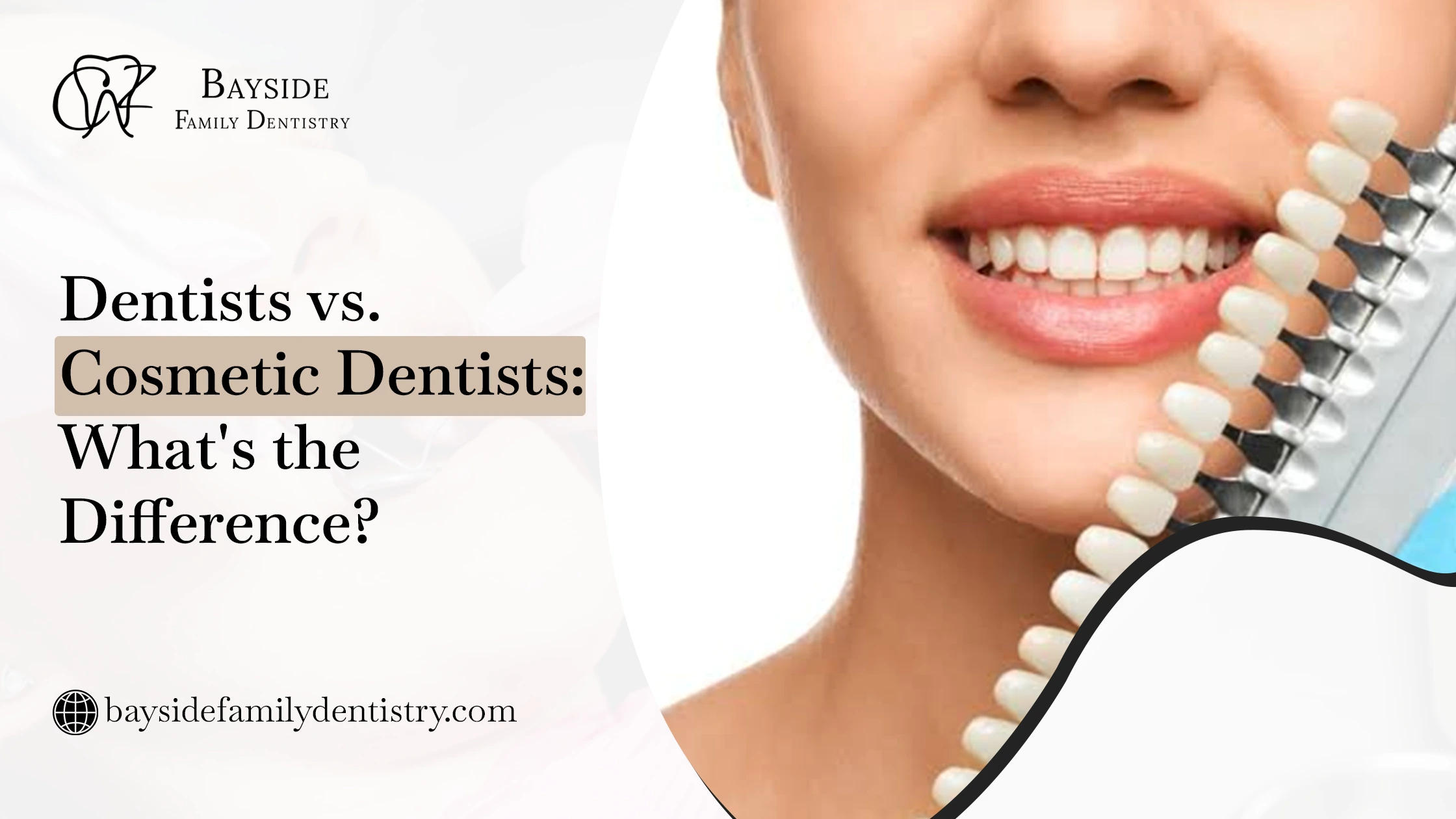
A tooth that needs a filling and a tooth that needs a veneer require two very different skill sets, even though both procedures happen in a dental chair. General dentists treat oral health problems like cavities, infections and gum disease. Cosmetic dentists focus on how teeth look, addressing issues such as staining, chips, gaps and uneven alignment.
Both hold the same base degree but their daily work, training paths and treatment goals often point in separate directions. Knowing the difference between a general dentist and a cosmetic dentist makes it easier to choose the right provider without wasting time or money on the wrong one.
Key Takeaways
- General dentists diagnose and treat oral health problems such as cavities, gum disease and infections. Cosmetic dentists focus on improving the appearance of teeth, gums and the overall smile.
- Cosmetic dentistry is not a recognized specialty under the American Dental Association. Any licensed dentist can offer cosmetic services, though training and experience levels vary widely.
- Many general dental offices now provide teeth whitening, bonding and veneers alongside preventive care. A practice that handles both saves patients from being referred elsewhere.
- Cosmetic procedures typically cost more than routine care and are rarely covered by insurance, since most plans classify them as elective.
What Is a General Dentist?
A general dentist serves as the primary care provider for oral health. After earning a Doctor of Dental Surgery (DDS) or Doctor of Dental Medicine (DMD) degree, a general dentist is licensed to diagnose conditions, perform procedures and manage ongoing treatment plans.
Routine exams, X-rays and cleanings fall under this category, along with restorative work that repairs damaged or missing teeth.
Common Services Provided by General Dentists
General dental offices handle a broad range of procedures on a daily basis. These include dental cleanings and exams, cavity fillings, root canals, tooth extractions, crowns, bridges, dentures and gum disease treatment. Some also place implants and offer orthodontic aligners, depending on the provider's training and equipment.
When Should You Visit a General Dentist?
Twice-a-year checkups are the standard recommendation for most adults. Outside of that schedule, tooth pain, sensitivity to hot or cold, swollen gums, a cracked tooth or bleeding during brushing are all reasons to book a visit.
A general dentist is also the right starting point when something feels off but the cause is not obvious, since the exam and X-rays will narrow it down.
What Is a Cosmetic Dentist?
A cosmetic dentist focuses on procedures that improve how teeth and gums look rather than treating disease or decay. The goal is a more balanced, brighter or more uniform smile.
According to the American Academy of Cosmetic Dentistry, cosmetic dentistry is not a formally recognized specialty under the ADA which means any licensed dentist can market these services. What separates one provider from another is the amount of post-graduate training, the volume of cases completed and the quality of results documented in before-and-after photos.
Common Cosmetic Dentistry Procedures
The most requested cosmetic treatments include porcelain veneers, professional teeth whitening, dental bonding, gum contouring, smile makeovers and clear aligners for mild to moderate alignment issues.
Some cosmetic dentists also offer Botox for jaw tension and facial aesthetics. Each procedure targets a different concern, from stained enamel to chipped edges to uneven spacing.
When Should You See a Cosmetic Dentist?
Patients typically seek cosmetic care when they feel self-conscious about their smile but have no underlying health problem that needs fixing first. Stained teeth that do not respond to over-the-counter whitening strips, a chipped front tooth visible when talking, gaps between teeth or a gummy smile are common reasons.
A consultation usually starts with photos, digital imaging and a discussion about realistic outcomes.
What Are the Key Differences Between General Dentists and Cosmetic Dentists?
Both types of dentist share the same foundational education but their priorities and daily caseloads set them apart in several practical ways.
1. Primary Focus: Oral Health vs. Smile Appearance
A general dentist treats disease. Cavities, infections, gum problems and broken teeth are the bread and butter of a general practice. A cosmetic dentist, on the other hand, addresses concerns that are aesthetic rather than medical.
A patient with a healthy mouth who dislikes the color or shape of their teeth is a typical cosmetic case. In many situations, general treatment has to come first. Placing veneers on teeth with untreated decay, for example, would create bigger problems down the line.
2. Common Treatments and Dental Services
General dentists perform fillings, extractions, root canals, crowns and periodontal cleanings. Cosmetic dentists spend most of their time on veneers, whitening, bonding, contouring and full smile redesigns. There is overlap in the middle.
A crown placed after a root canal is restorative but a crown placed on a healthy tooth to improve its shape and color is cosmetic. The same procedure serves a different purpose depending on the patient's situation.
3. Education, Licensing and Professional Training
Every dentist in the United States completes a four-year doctoral program at an accredited dental school after undergraduate study. Licensing requires passing the National Board Dental Examinations and a clinical board exam.
Beyond that baseline, cosmetic-focused dentists pursue additional coursework, hands-on workshops and mentorships through organizations such as the American Academy of Cosmetic Dentistry. The AACD offers an accreditation credential that involves written exams and the submission of completed casework for peer review, though earning it is voluntary and not required to practice.
4. Treatment Planning and Patient Expectations
General treatment planning is driven by clinical findings. The X-ray shows a cavity, so the dentist fills it. Cosmetic planning works differently because the patient's personal preferences guide much of the process. Shade selection for veneers, the degree of whitening and how much gum tissue to reshape are all decisions made together.
Digital mock-ups and wax models help patients see projected results before any permanent changes happen which reduces the chance of disappointment after the work is done.
Can a General Dentist Perform Cosmetic Dentistry Procedures?
Yes. Because cosmetic dentistry is not classified as a separate specialty by the ADA, any licensed general dentist can legally offer whitening, bonding, veneers and other aesthetic treatments. The real question is how often they do it.
A dentist who places five sets of veneers a month has a different comfort level than one who handles a single case per year.
Patients considering cosmetic work should ask how many similar cases the dentist has completed and request before-and-after photos. Membership in the AACD or completion of recognized cosmetic training programs is another useful indicator, though not a guarantee on its own.
Is Cosmetic Dentistry More Expensive Than General Dentistry?
In most cases, yes. The cost difference comes down to two factors: materials and insurance coverage. Cosmetic procedures often use higher-grade porcelain, advanced bonding agents and lab work that requires more precision and time.
A single porcelain veneer can range from $900 to $2,500 depending on the market, the lab and the dentist's experience.
Insurance plans generally cover preventive and restorative work, such as cleanings, fillings and medically necessary crowns. Cosmetic procedures are usually classified as elective which means the patient pays out of pocket.
Some offices offer financing through CareCredit or similar programs to break larger bills into monthly payments. Patients should always request a written estimate and confirm what their plan will and will not cover before agreeing to treatment.
Conclusion
General dentists keep teeth and gums healthy. Cosmetic dentists improve how a smile looks. Many practices now handle both under one roof which means patients do not always have to choose between the two or visit separate offices for different needs.
Bayside Family Dentistry offers preventive, restorative and cosmetic services including porcelain veneers, teeth whitening, dental bonding and smile makeovers. Call us or request an appointment online to schedule a consultation.


