



If you chipped a tooth and started looking into your options, you have probably come across veneers vs. bonding as the two main cosmetic fixes. Both can make a chipped tooth look like nothing ever happened. But they differ in how they work, what they cost, how long they last, and how much of your natural tooth they involve. Neither one is universally better. The right choice depends on how bad the chip is, what you are willing to spend, and how long you want the fix to last.
Quick Answer
Dental bonding is quicker, cheaper, and less invasive. It works well for small chips and minor cosmetic fixes. Veneers cost more and take longer but last significantly longer and look more natural over time. For a small chip on one tooth, bonding is usually the practical choice. For bigger cosmetic concerns across multiple teeth, veneers tend to deliver a better long-term result. Your dentist can help you figure out which one actually fits your situation.
Understanding Veneers
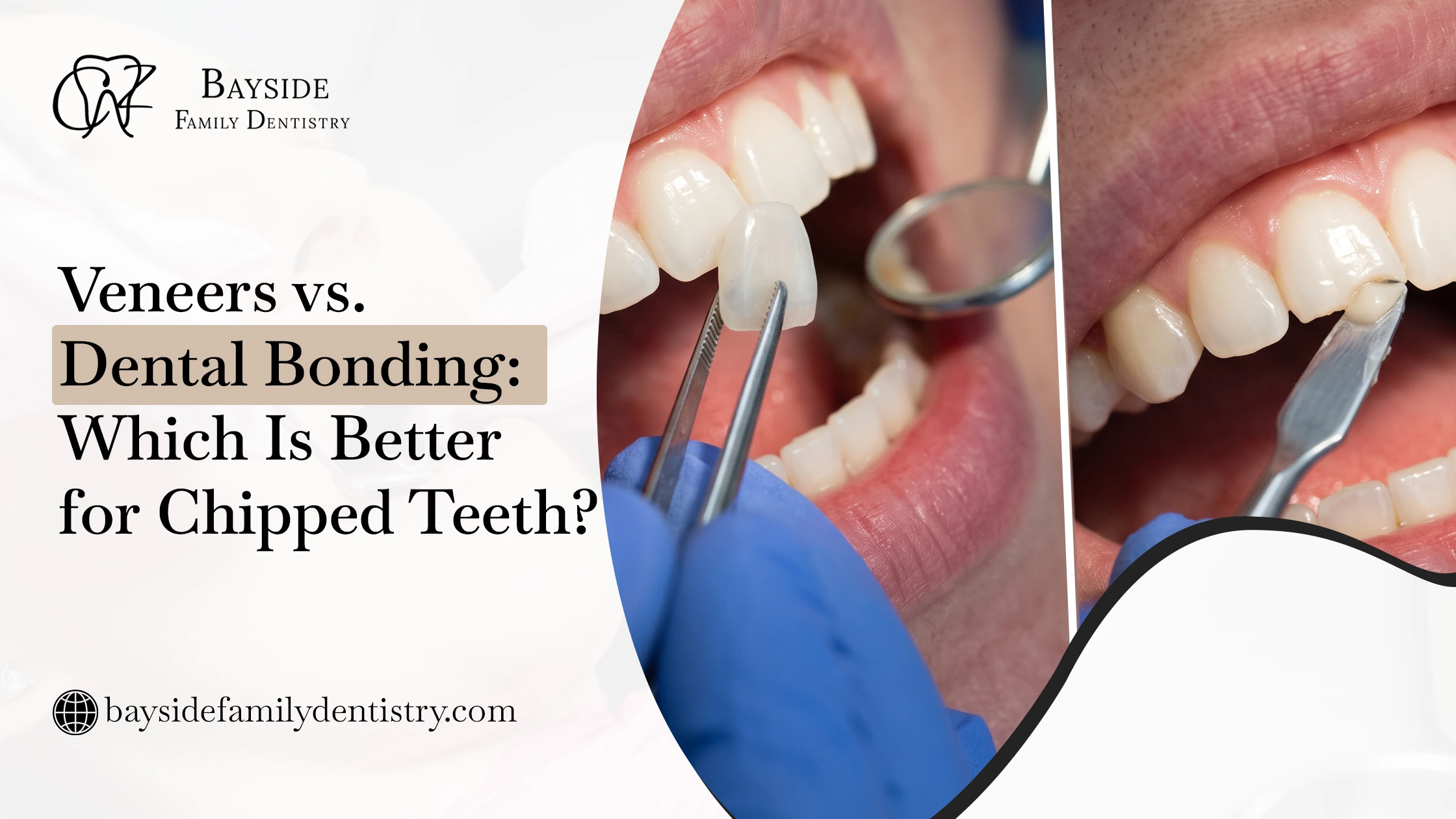
Veneers are thin shells, usually made of porcelain, that are custom-built in a dental lab and then bonded to the front surface of your teeth. Think of them like a cover that sits over your existing tooth and changes its shape, color, and overall appearance.
The process usually takes two visits:
- First visit: your dentist prepares the tooth by removing a thin layer of enamel, takes impressions, and sends those to a lab where your veneers are custom-made
- Second visit: the finished veneers are permanently bonded to your teeth
Because enamel removal is involved, veneers are generally considered a permanent commitment. You cannot go back to your original tooth once it has been prepped. Here is what you get in return:
- Porcelain resists staining better than your natural teeth in many cases
- With proper care, veneers can last an estimated 10 to 20 years depending on your habits
- They look extremely natural and hold their shape over time
- Estimated cost tends to fall between $1800 and $2,500 per tooth, though your quote could vary
One thing worth mentioning is that veneers are not indestructible. Biting into hard objects, grinding your teeth at night, or using your teeth as tools can damage them just like they would damage a natural tooth. If you grind your teeth, your dentist might recommend a night guard to protect your investment. If a veneer chips or cracks, it usually needs to be fully replaced rather than patched, which is another cost to keep in mind down the road.
Dental Bonding Explained
Dental bonding is a simpler, faster process. Your dentist applies a tooth colored composite resin directly to the chipped or damaged area, shapes it by hand, and hardens it with a special light. The whole thing is usually done in a single visit, often in 30 to 60 minutes per tooth, and most of the time does not even require anesthesia for small chips.
A few things that make bonding appealing:
- Usually requires little to no removal of your natural tooth structure
- In many cases, it can be reversed or redone without permanent changes
- No lab work, no second appointment, no temporary teeth in between
- Estimated cost is significantly lower, generally around $400 to $600 per tooth
The trade-offs are worth knowing too:
- The resin is not as strong or stain resistant as porcelain
- Coffee, tea, red wine, and similar things can discolor it over time
- Bonding tends to chip or wear down faster under daily use
- Estimated lifespan is around 3 to 10 years before it needs a touch up, repair, or replacement
For small chips, cracks, gaps, or minor reshaping, bonding can look great and get the job done fast. It just does not hold up as long as a veneer would under the same conditions. The upside is that when bonding chips or stains, fixing it is usually quick and inexpensive. Your dentist can patch or redo the resin in a single visit without starting from scratch, which is far less hassle than replacing a full veneer.
Comparing Veneers and Dental Bonding
Here is a side-by-side look at how the two options stack up across the factors that matter most.
| What to Compare | Veneers | Dental Bonding |
|---|---|---|
| Estimated Cost Per Tooth | $1800 to $2,500 | $400 to $600 |
| Estimated Lifespan | 10 to 20 years | 3 to 10 years |
| Number of Visits | Usually two | Usually one |
| Tooth Preparation | Some enamel removal, varies by case | Little to none in most cases |
| Stain Resistance | High | Moderate, can discolor over time |
| Repairability | Usually requires a full replacement | Can often be patched in one visit |
| Best For | Larger cosmetic changes, multiple teeth | Small chips, minor fixes, single teeth |
These are approximate estimates. Your actual experience with cost, lifespan, and results will depend on your specific case, your dentist, and how well you care for your teeth after the procedure.
It is also worth thinking about the long term math. Bonding is cheaper upfront, but if you need it replaced two or three times over the same period that one set of veneers would last, the total cost can start to overlap. That does not automatically make veneers the smarter financial choice for everyone, but it is something to factor in when you are comparing the two side by side.
Which Is Better for Chipped Teeth?
There is no one-size-fits-all answer here. It depends on the chip, your goals, and your budget. Here is a straightforward way to think about it.
Bonding is probably the better choice if:
- The chip is small and mostly cosmetic
- You only need one or two teeth fixed
- You want it done quickly in a single appointment
- Budget is a priority right now
- You prefer a less invasive option with no permanent changes to your tooth
- You are okay with touching it up or redoing it in a few years
Veneers are probably the better choice if:
- The chip is larger or part of a broader cosmetic concern
- You want to address multiple teeth at once for a uniform look
- Long-term durability and stain resistance matter more to you than upfront cost
- You are dealing with discoloration, uneven teeth, or gaps alongside the chip
- You want a result that is going to hold up for a decade or more with minimal maintenance
A combination of both might make sense if:
- You want veneers on your most visible front teeth but bonding on adjacent teeth where the work is less noticeable
- You are phasing treatment over time and starting with bonding now while planning veneers later
- Your dentist recommends a mixed approach based on what each tooth actually needs
The best move is always to talk to your dentist about your specific teeth. What works for a hairline chip on a side tooth is completely different from what works for a visible break on a front tooth. A quick consultation gives you a real answer instead of a general one.
Conclusion
The veneers vs. bonding decision for chipped teeth comes down to how much work the tooth needs and how long you want the fix to last. Bonding is the quick, affordable option for small repairs. Veneers are the longer lasting investment for bigger cosmetic changes. Neither is objectively better. They just solve different versions of the same problem.
If you are in Bayside or anywhere in Queens and want to find out which option fits your situation, Bayside Family Dentistry offers cosmetic consultations where Dr. Caz can walk you through both options and help you decide what makes the most sense for your teeth and your budget.


