


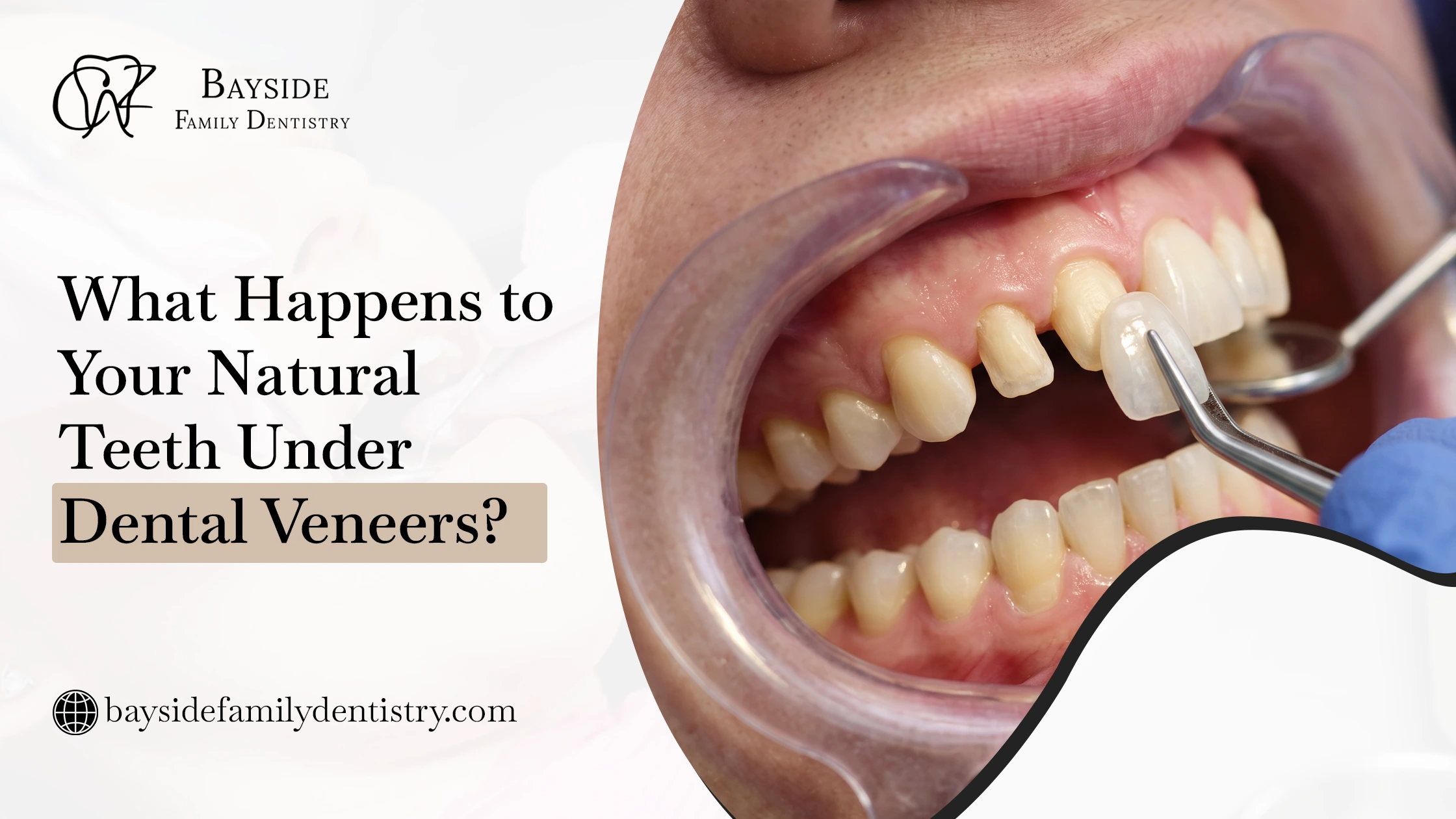
One of the most common concerns before getting veneers is whether the procedure damages the teeth underneath. Patients often wonder if their natural tooth is being sacrificed for a better-looking surface. The short answer is no. The underlying tooth remains in place and continues to function normally.
A thin layer of enamel is removed so the veneer bonds properly and sits flush, but the tooth beneath it remains alive and structurally sound. How well those teeth hold up depends on preparation and consistent oral care, which makes understanding what happens to your natural teeth under dental veneers important before moving forward.
Key Takeaways
- Your natural tooth stays in place under the veneer. It is not pulled, capped or replaced.
- About 0.3 to 0.7 millimeters of enamel is removed so the veneer bonds properly and sits flush with surrounding teeth.
- Teeth can still develop cavities under or around veneers if brushing and flossing fall off.
- Veneers are considered irreversible because the removed enamel does not grow back, though the tooth itself remains functional.
- Regular dental visits and consistent home care are the most reliable way to keep both the veneer and the tooth beneath it in good condition.
What Really Happens to Your Natural Teeth Beneath Veneers?
Veneers are often compared to crowns and implants, which leads many patients to assume something dramatic is involved. That is not the case.
1. Your Natural Tooth Stays in Place Under the Veneer
Nothing is extracted. A veneer is a thin shell, typically porcelain or composite resin, that covers the front surface of the tooth. The rest of the structure remains in place. It functions as a protective facing rather than a replacement. The root, nerve and inner layers are left untouched.
2. A Thin Layer of Enamel May Be Removed Before Placement
For traditional porcelain veneers, the dentist removes a small amount of enamel from the front and sometimes the edges of the tooth. This step is called preparation and it takes off between 0.3 and 0.7 millimeters, roughly the thickness of a contact lens. The goal is to create enough room so the veneer does not extend past neighboring teeth or feel bulky against the lip.
Minimal-prep and no-prep options, such as Lumineers, remove less enamel or skip this step entirely. These options do not suit every case, however. Teeth that are already crowded or pushed forward may still need some reduction for a natural-looking result.
3. The Veneer Is Bonded to Your Existing Tooth Structure
Once the tooth is prepped, the veneer is attached using a dental adhesive and hardened with a curing light. This bond is strong enough to handle years of normal chewing and biting. The adhesive also seals the prepared surface which helps protect it from bacteria and temperature sensitivity. A properly bonded veneer will not shift or come loose during everyday use.
4. Your Natural Tooth Remains Alive Beneath the Veneer
Because only a surface layer comes off, the tooth keeps its blood supply and nerve. It is still a living tooth. You will feel temperature and pressure the same way you did before, though mild sensitivity for a week or two after placement is common. That usually fades as the tooth adjusts.
5. Your Teeth May Look Different Without Their Veneers
If a veneer chips or comes off years later, the tooth underneath will not look the way it did before the original preparation. Enamel does not regenerate. A prepared tooth usually appears rough, uneven or smaller than its unprepared neighbors. This is one reason veneers are considered a permanent decision. Once the enamel is removed, the tooth will need some form of coverage going forward.
6. Your Natural Teeth Continue to Need Care Over Time
A veneer covers the front face of a tooth, but it does not seal the whole thing. The back, the gumline edges and the spaces between teeth remain exposed to plaque and bacteria. Brushing, flossing and routine cleanings are just as important after veneers as before.
Do Veneers Permanently Damage or Weaken Your Natural Teeth?
Not when the work is done properly. Enamel removal is minimal and carefully controlled. Clinical research shows that porcelain veneers can maintain high survival rates over many years when properly placed and maintained. However, their long-term success depends on factors such as enamel preservation, bonding quality, oral hygiene, and biting forces.
Aggressive preparation is a different story. Taking off more enamel than necessary weakens the tooth and raises the chance of sensitivity or fracture. This is where the dentist's approach matters. A conservative prep preserves more natural structure and gives the tooth a better long-term outcome.
Grinding or clenching at night adds another risk. Patients with bruxism put extra force on the veneers and the teeth underneath and that pressure can crack either one. A night guard is usually recommended to spread the load more evenly.
Can Your Natural Teeth Rot or Develop Cavities Under Veneers?
Yes, they can. Veneers cover the front surface, but decay usually starts at the margins, the edges where the veneer meets the natural tooth near the gumline. Bacteria can work into any small gap when oral care is not consistent.
A few situations raise the risk:
- Plaque buildup along the gumline that is not cleared through daily brushing and flossing.
- Gum recession that exposes root surfaces below where the veneer ends.
- A veneer with a poor marginal seal which can happen if the bonding was imprecise or the restoration is aging.
- A diet heavy in sugar and acid, which feeds the bacteria responsible for decay.
Porcelain itself will not decay because it is an inert material. However, the natural tooth structure around and behind the veneer remains vulnerable. If decay reaches the inner layers, a root canal or a full crown may be needed and the veneer would have to come off in either case.
What Happens When Dental Veneers Are Removed or Replaced?
Porcelain veneers are durable, but they do not last forever. Most hold up for 10 to 20 years depending on daily habits, wear patterns and how consistently the patient keeps up with dental visits. When a veneer chips, debonds or wears down enough to need replacing, the dentist removes it by grinding through the porcelain and then evaluates the tooth underneath.
If the tooth is healthy, a new veneer can be bonded over it. Sometimes a small amount of additional enamel needs smoothing before the replacement fits properly. When the tooth has developed decay or lost structure, a crown may be the better option since it wraps around the entire tooth and provides more support.
Leaving a prepared tooth uncovered for long is not recommended. The remaining enamel is thinner than before which makes the tooth more sensitive, more prone to staining and less protected against everyday wear.
How Can You Keep Your Natural Teeth Healthy Under Veneers?
Keeping your teeth healthy under veneers comes down to a few consistent habits:
- Brush twice a day with a non-abrasive fluoride toothpaste. Harsh whitening formulas can dull porcelain over time.
- Floss daily, paying attention to the gumline around each veneer.
- Avoid biting directly into hard items such as ice, raw carrots or hard candy with the front teeth.
- Wear a night guard if you grind or clench while you sleep.
- Visit your dentist every six months for cleanings and a checkup. These visits catch early signs of gum recession, margin gaps or decay before they grow.
- Cut back on staining habits. Porcelain resists discoloration better than natural enamel, but the bonding material at the edges can pick up color from coffee, tea or tobacco over time.
Conclusion
Your natural teeth remain alive and functional underneath veneers. The preparation takes off a thin layer of enamel to make room for the shell, but the nerve, root and supporting structure stay intact. Decay can still develop at the margins and the teeth underneath need consistent brushing, flossing and professional cleanings to stay healthy.
Bayside Family Dentistry offers porcelain veneers as part of its cosmetic services. Dr. Caz evaluates each case to determine how much preparation is needed and whether veneers are the right fit. Call us or request an appointment online to discuss your options.


